
A Resort, Light Shows and a Renewed Ecosystem: What’s Ahead for VDNH — Highlights from the National Landscape Architecture Award
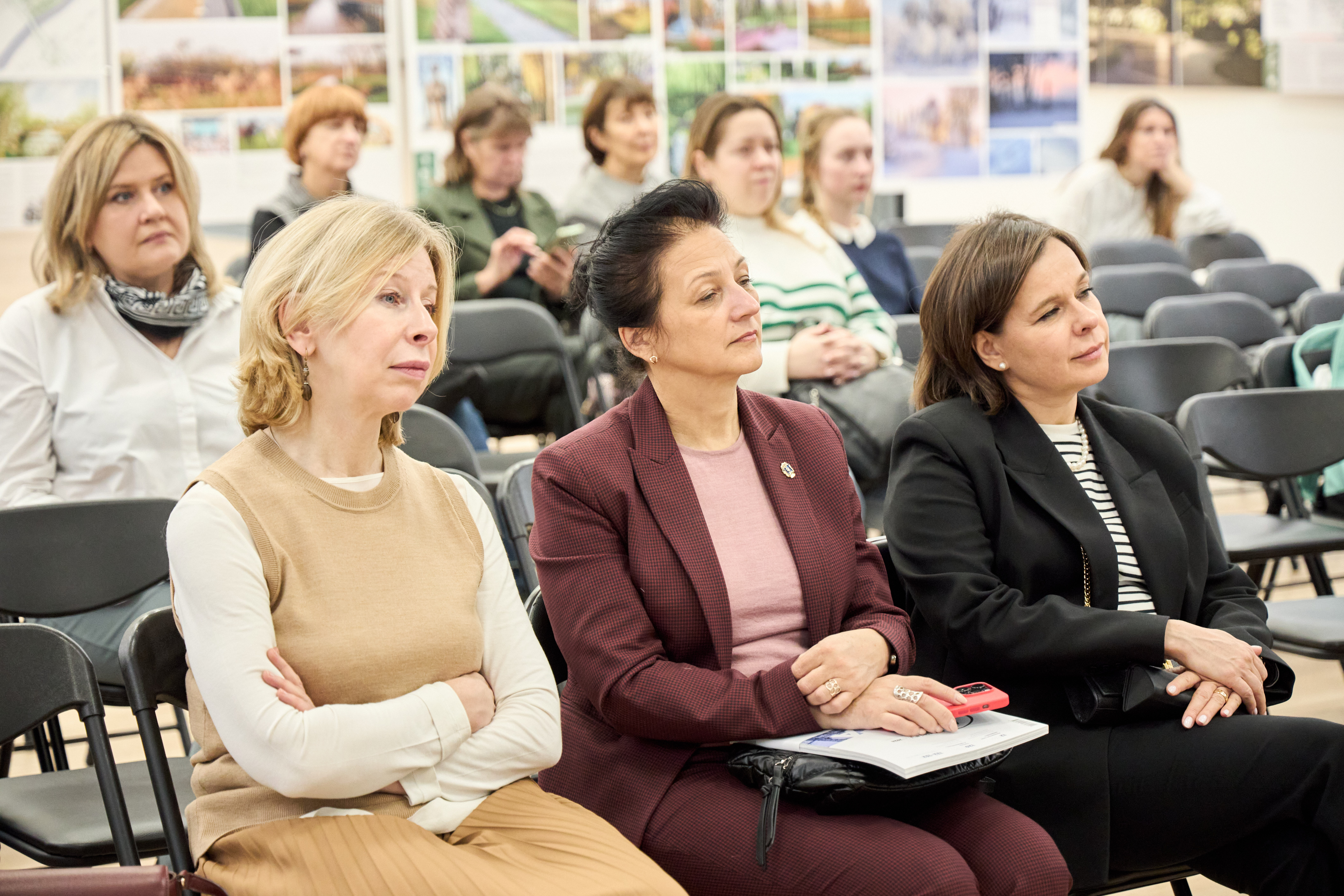
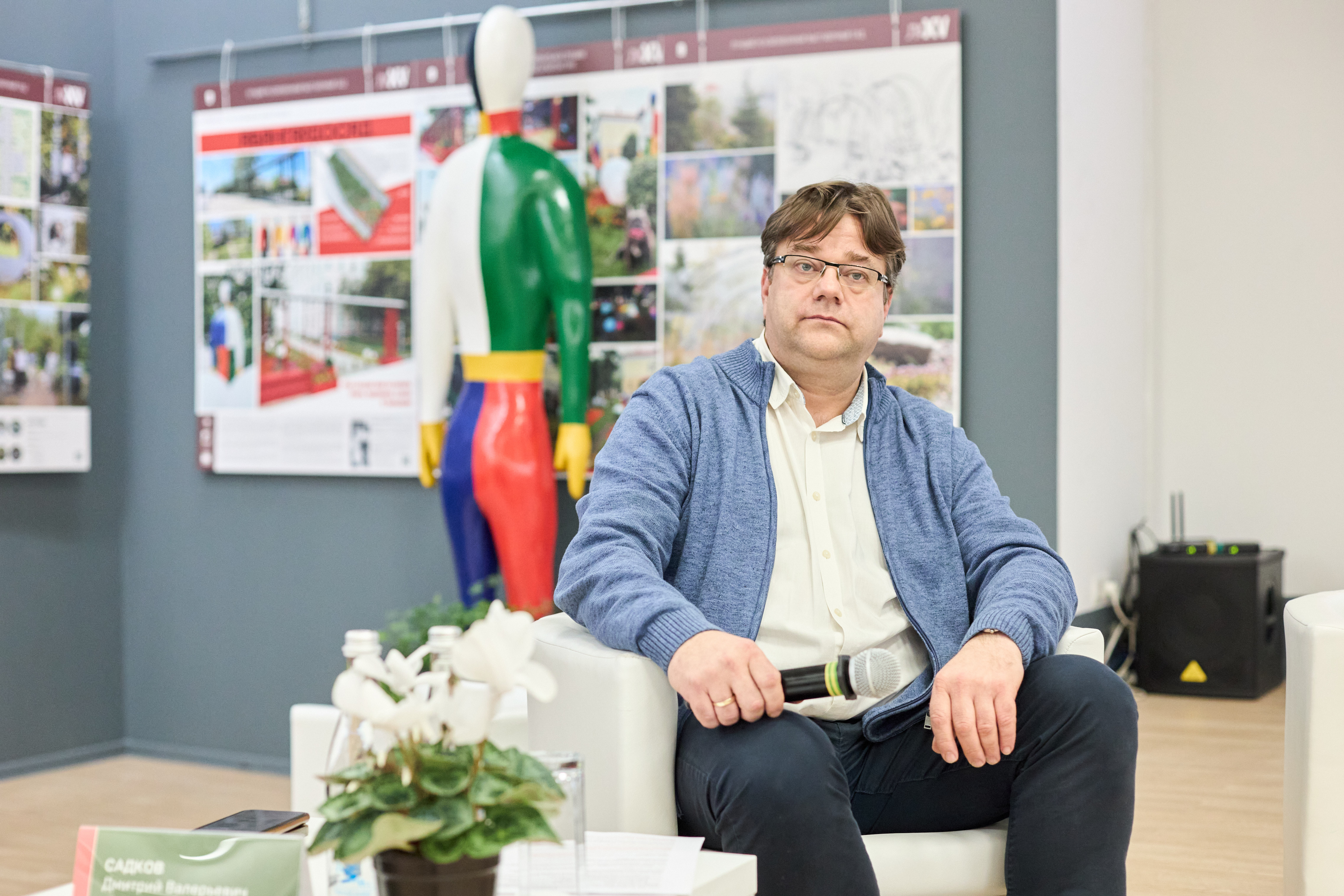
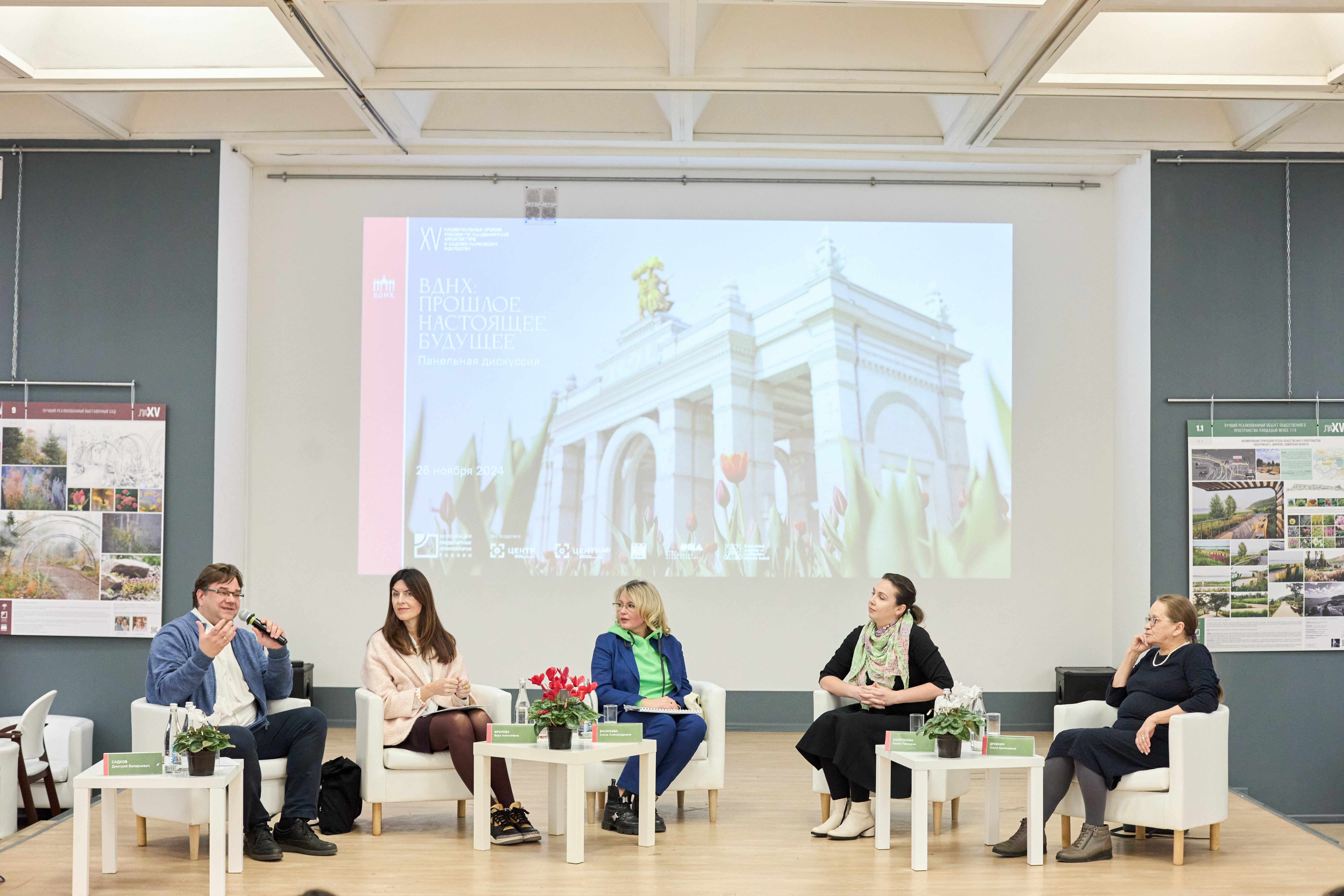
Photo: Nikolai Sokolov
On 26 November, as part of the business programme of the 15th National Landscape Architecture and Garden Art Award of Russia, the panel discussion “VDNH: Past, Present, Future” took place. Participants and guests learned about more than twenty upcoming improvement projects at Russia’s main Exhibition, which celebrates its 85th anniversary this year.
The discussion opened with a historical overview by Vera Frolova, Head of Resident Relations at the Permanent Exhibitions Division, VDNH Department of Museum and Educational Programmes. She described how the Exhibition’s appearance has changed over the decades. Since its origins in the late 1930s as the All-Union Agricultural Exhibition, landscape architecture has been a fundamental component of the site.
“Near the national pavilions were regional gardens where exotic plants brought from all parts of the country were planted. It was a vast, almost uncontrolled introduction effort. Trains and trucks delivered plants to Moscow. I found records indicating that 297 plant species from across the USSR were brought in, 54 of which were introduced in Moscow for the first time. It turned out that 38 of these species could be cultivated outdoors in Moscow without cover. It was an unimaginable experiment,” Frolova noted.
Elena Vasilyeva, Chief Landscape Architect at VDNH’s Capital Construction and Renovation Directorate, presented landscape-development projects planned through 2030. Twenty-five initiatives were unveiled. Among them: by 2026, a thermal resort with a year-round pool and bathing areas will be built by a private investor on the site of the current industrial-storage complex. New trees and shrubs will be planted near the Main Gate Arch.
The Exhibition’s central square—Industry Square—will undergo a major redevelopment:
“The reconstruction of the ‘Rocket’ fountain, the creation of a new light-dynamic fountain, contemporary landscaping with geo-plastic forms, and innovative lighting integrated into paving are all planned. Modern plant compositions will be introduced. Work is already underway and will be completed in 2025. The goal is to transform the appearance of the central zone and reshape visitor experience. Light shows are planned.”
A new multifunctional exhibition complex is expected on the EXPO site by 2026, including the reconstruction of Pavilion No. 75 and restoration with adaptive reuse of Pavilion No. 70.
Kamenkiye Ponds will also see improvements, including a floating walkway with a water-plant garden—though funding for this project is still under discussion. Across VDNH, children’s playgrounds will be updated; new attractions will appear in the Orion Park. The sports cluster in Ostankino Park, including the stadium, will be modernised starting in 2027, pending funding allocation.
The development programme places strong emphasis on the ecosystem. Plans include updating the planting palette and possibly reviving the early idea of arranging vegetation according to natural plant communities. Vertical-greening elements are also being considered:
“We are developing various structures for vertical greening: containers mounted on brackets with roof-fed irrigation systems, using vines and climbing plants.”
Other projects include improvements around the Uzbekistan Pavilion, the “Rodnichok” square, construction of a museum dedicated to Kliment Timiryazev and a nearby square, reconstruction of Nalchik Square, enhancements around the “Floriculture and Landscaping” Pavilion and the equestrian arena, and future upgrades to the Southern Rose Garden.
The area of ornamental plantings is growing rapidly. Liliya Kharitonova, Landscape Architect for Grounds and Facilities Maintenance, noted:
“In 2014, we had only 7,500 square metres of flowerbeds. In 2024, we have 77,500 square metres. At present we maintain more than 35,000 roses, representing 27–28 varieties.”
Olga Drobnich, Landscape Architect and Architect-Restorer of the Highest Category, spoke about the unique Georgian Square, created in 1967 by architect Georgy Managadze, who reproduced the nature and atmosphere of Georgia using carefully selected plants, materials and small architectural forms. Only fragments remain today.
“This is a true work of garden art,” Drobnich emphasised. “We want to restore Georgian Square to its appearance in the 1970s.”
The discussion was moderated by Dmitry Sadkov, Head of the Comprehensive Improvement Design Workshop, GBU “GlavAPU”.
The Organising Committee of the 15th National Landscape Architecture Award is chaired by Sergei Georgievsky, Co-Founder of the Agency “CENTER”, which also serves as organiser and programme director of the business programme.