
Top 7 Trends in the Architecture of the Future According to Leading Russian Urbanists
The expert program on architecture and urbanism, “Looking into the Future,” was held at the National Center “Russia.” The event, focused on key upcoming trends in architecture, was attended by over 1,000 professionals, including architects, builders, urban planners, developers, entrepreneurs, investors, government representatives, public figures, and journalists.
Sergey Georgievsky, co-founder of the Strategic Development Agency “CENTER,” spoke at one of the forum’s main sessions, “Architecture Tomorrow: The Role of the National and the Global,” presenting a study on the future of architecture as envisioned by industry professionals. The research was conducted by the National Center “Russia” and the CITY Center at the HSE Faculty of Urban and Regional Development.
One key finding: 37% of respondents believe that Russian architecture should convey national values and regional identity. However, a unified definition of “national architecture” has not yet emerged. Kirill Puzanov, Associate Professor at the HSE Faculty of Urban and Regional Development, noted: “Experts did not reach a consensus on what constitutes national architecture. When discussing the national dimension in the context of global experience, they referred to different aspects. Some emphasized reliance on traditions and development of a unique artistic language (Saudi Arabia and the Arabian Peninsula were often cited as examples), while others focused not on style or object but on the approach to creation, highlighting Japan as a model. Some argued that national architecture survives only where global influence has not reached, such as in parts of Africa. The majority agreed that national architecture cannot exist in isolation; it is always at the intersection of multiple cultural currents.”
Andrey Chernikov, Professor at the International Academy of Architecture, head of the Architecture Department at HSE, and President of the Yakov Chernikov Foundation, spoke about how Soviet modernism deliberately created regional architectural styles in the USSR, for example, in Central Asia.
Vladimir Kuzmin, architect-designer, head of the Pole-Design project group, and lecturer at MARHI, MARSH, HSE, and RANEPA, argued that the future of architecture goes beyond the national: “When on the edge of something — in time or space — people inevitably abandon previous identities. National identity will exist, but in unpredictable ways. I hope we remain citizens of Earth, and that will be our global national architecture — terrestrial.”
Sergey Georgievsky emphasized that, in Russia, global and national dimensions are not in opposition: “The global provides a general standard where humans are central and architecture is merely the backdrop. At the same time, regions such as Dagestan, Chechnya, Yakutia, and Tatarstan are seeking their national identity in architecture. Russia’s uniqueness lies in uniting numerous peoples, each desiring architectural self-expression within a shared cultural code.
Consider the Kamal Theater in Kazan, which expresses Tatar identity through the interpretation of Moscow-based Wowhouse and Kengo Kuma, the legendary Japanese architect. Or the new Arctic Epicenter and Philharmonic in Yakutia, where Vladimir Plotkin collaborated with local architects to convey a new vision of Yakut architecture. There are many such examples.”
The study also highlighted other future architectural trends, including transformable spaces, autonomous multifunctional complexes, infrastructure for new transport modes, as well as global trends in sustainability, energy efficiency, innovation, smart solutions, and human-centered, inclusive architecture.
During the “Architecture of the Future” session, moderated by Sergey Georgievsky, Anton Nadtochiy, architect and founder of ATRIUM, identified vertical urbanization, experiential architecture, and the development of underutilized spaces in harsh climates as key trends.
Pavel Zhuravlyov, project director at Ostozhenka Architectural Bureau, noted that buildings are expected to have shorter lifespans: “Modern theaters, for example, are light structures designed for changing functions or temporary use, rather than granite-and-marble edifices.”
Artyom Ukropov, co-founder and partner at Megabudka, stressed the importance of planning urban development 80–100 years ahead with ecological considerations. James Law, founder and CEO of CYBERTECTURE (Hong Kong), highlighted human-centric design and advanced technology use. Tarik Oualalou (OUALALOU + CHOI, Morocco-France) and Shadi Azizi (Islamic Azad University, Iran) emphasized strategic settlement planning as essential for addressing environmental challenges: “The question of the future is inseparable from architectural thinking because foresight is our core function,” said Oualalou.
Marina Egorova, architect and founder of Empate, concluded that architecture should prioritize human comfort and adaptability over spectacle: “Future architecture must address how we handle outdated materials and changing settlements. Cities and villages are disappearing, life structures are transforming — we need to think about adaptive reuse rather than letting nature reclaim them. People are already somewhat tired of constant amazement; comfort and sustainability are becoming paramount.”
The expert program was part of the architectural exhibition “Birth of Scale,” which runs until the end of July and includes lectures and masterclasses on Russia’s most significant architectural projects.
More details at the link: https://russia.ru/architecture.
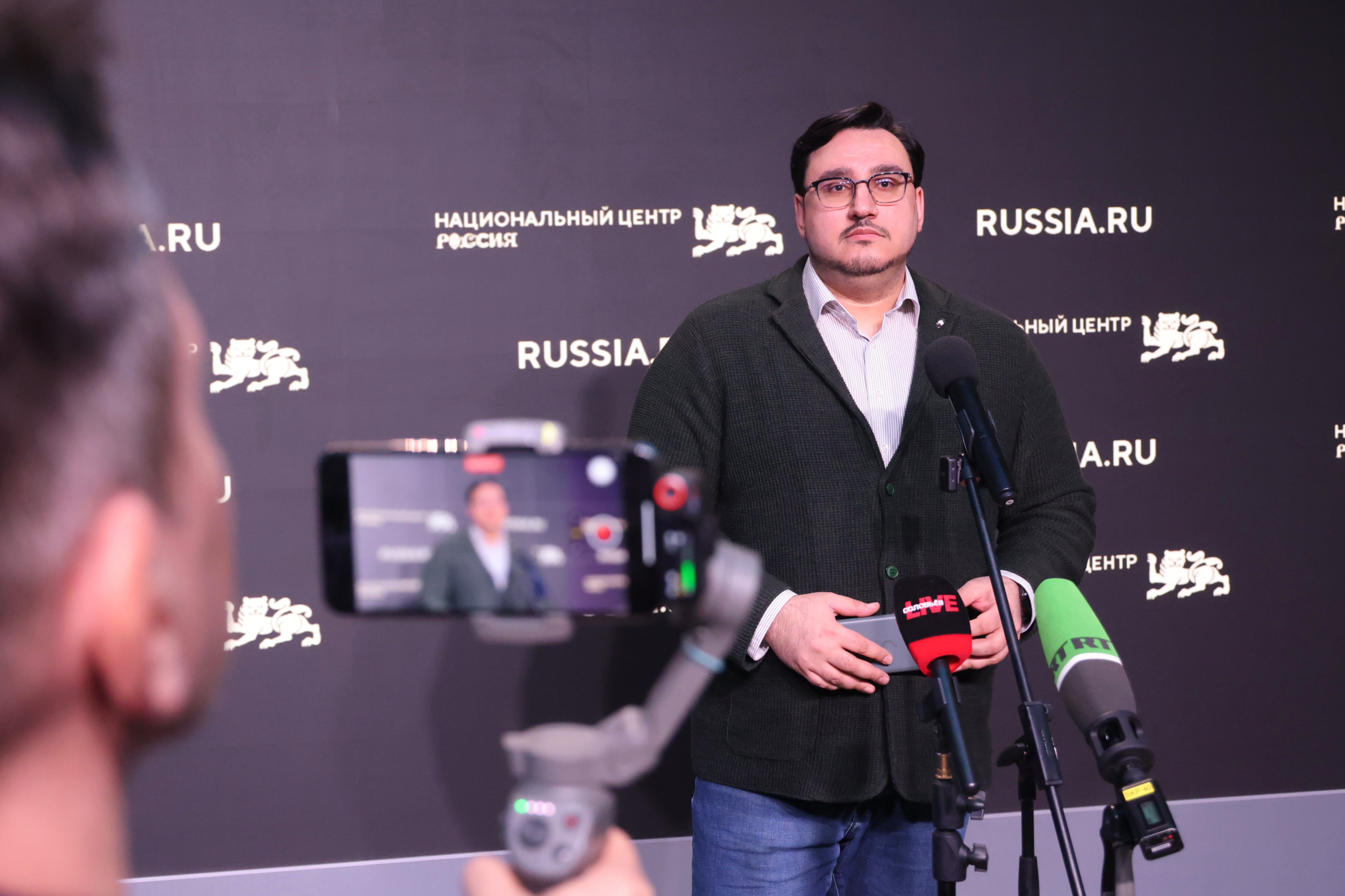
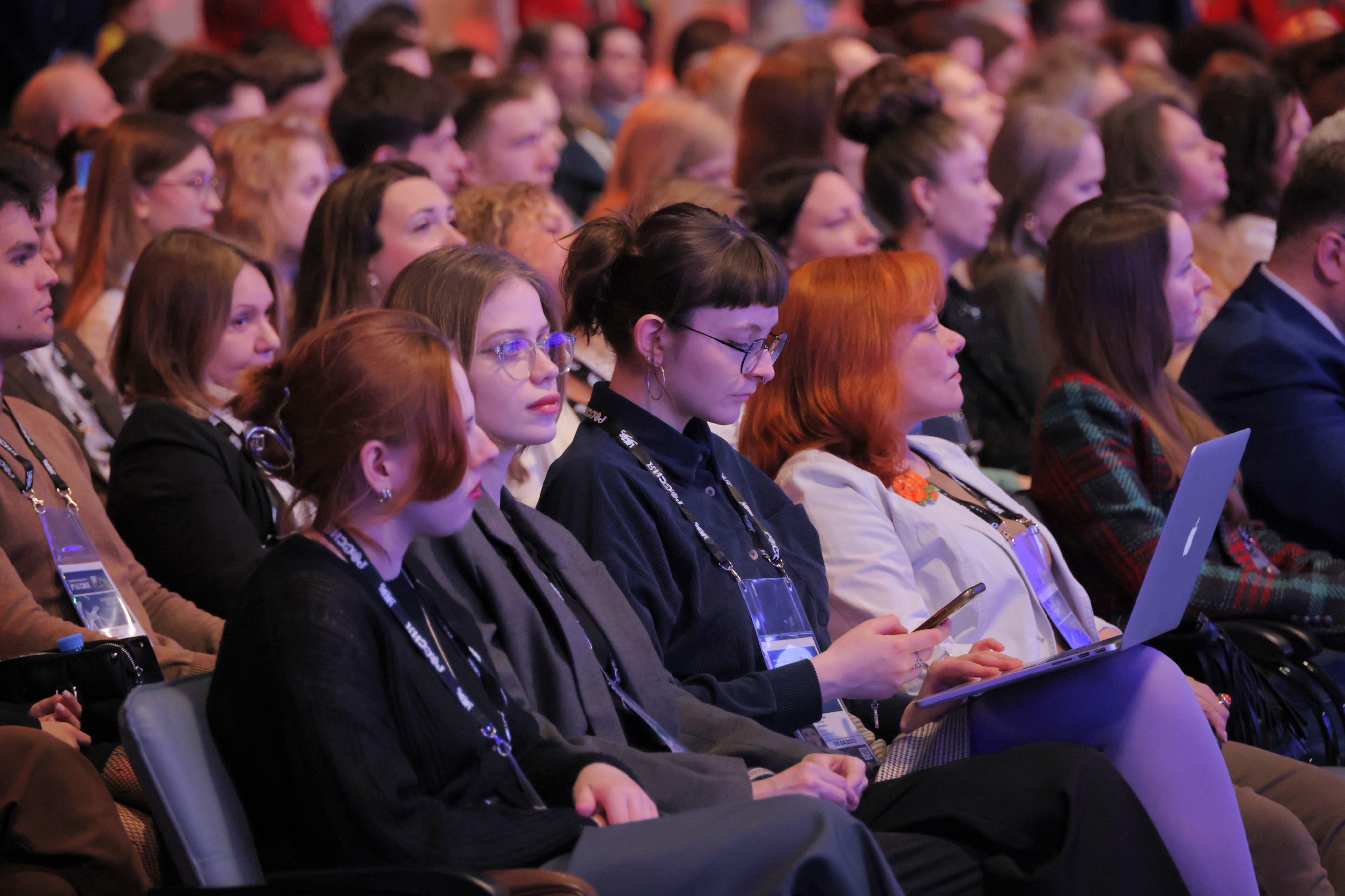
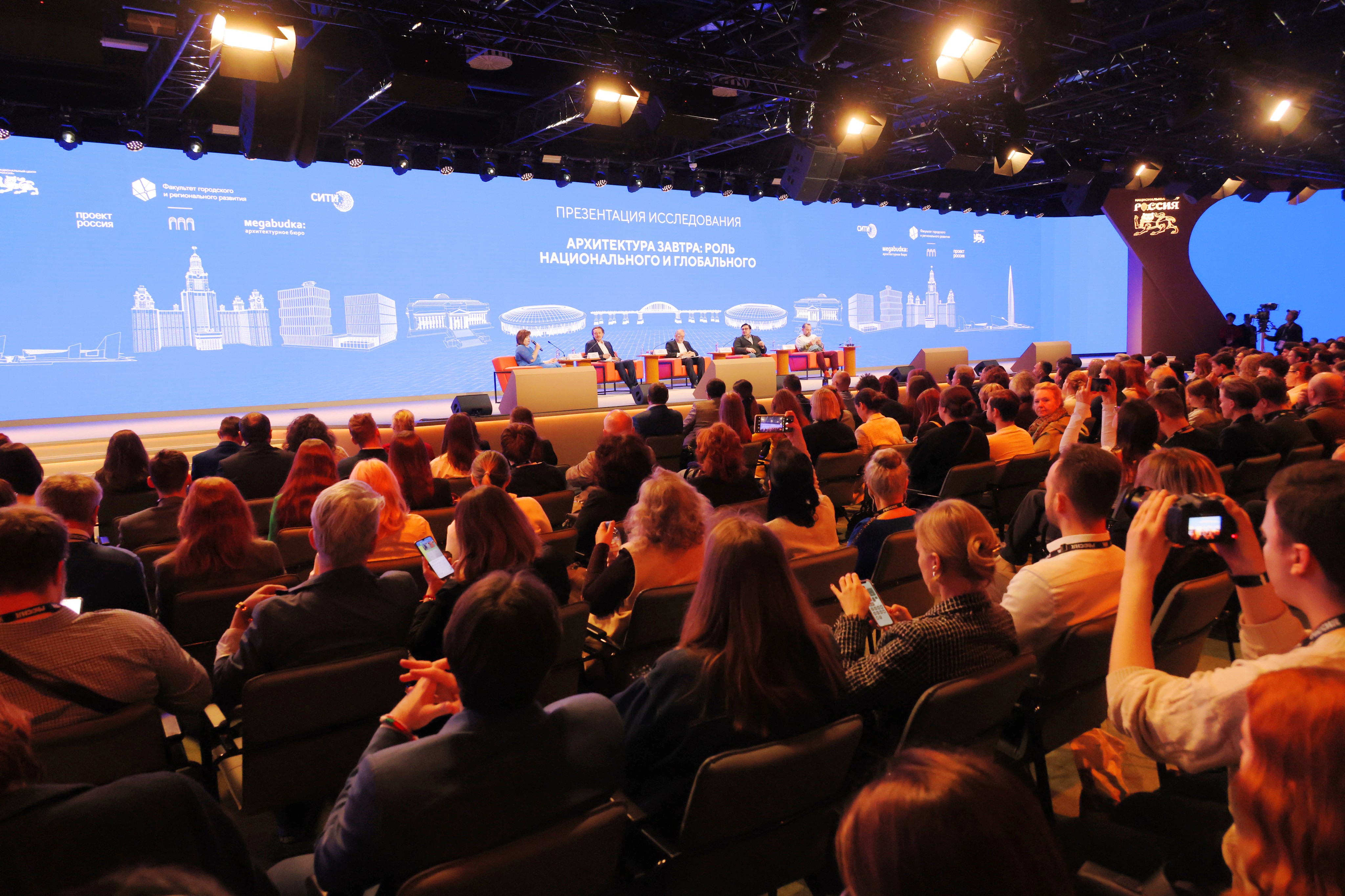
Photo: Press Service, National Center “Russia”