
Green Heritage: Preserving the Ecosystem of Historic Parks and Gardens
Russia has over 150,000 cultural heritage sites. Leading regions include Rostov, Krasnodar Krai, Tver, and Moscow. At VDNH in Moscow alone, there are 49 objects: arches, fountains, sculptures, and pavilions. A round table on “Green Heritage: The Ecological Aspect of Adapting Historic Sites” was held at the Cosmonautics and Aviation Center, moderated by Sergey Georgievskii, co-founder of the CENTER Agency.
When considering cultural heritage, it is wrong to focus only on monuments and ignore gardens and parks. Everything surrounding architectural structures also deserves attention and protection. Experts exchanged views on preserving historic ecosystems, creating and maintaining green zones, and developing historical parks.
“Historical parks as landscape architecture objects combine historical, architectural, and ecological components. Their uniqueness lies in duality: they include historical and architectural monuments as well as surrounding landscapes, forming a special ecological space,” emphasized Georgievskii.
Notable examples were shared by Elizaveta Fokina, director of the Tsaritsyno Museum-Reserve, and Alexey Reteyum, chairman of the Parks Association Council, who discussed the Aptekarsky Ogorod experience. Taisiya Volftub, president of the Landscape Architects Association, explained the unique aspects of the “Russian Garden,” noting that both plant selection and layout should echo Russian nature.
The round table preceded the announcement of the “Golden Ear” competition results, where participants proposed ideas for the architectural and urban development of VDNH. Sergey Sokolov, head of the Architectural Department of the VDNKH Capital Repair and Construction Department, presented the contestants’ projects.
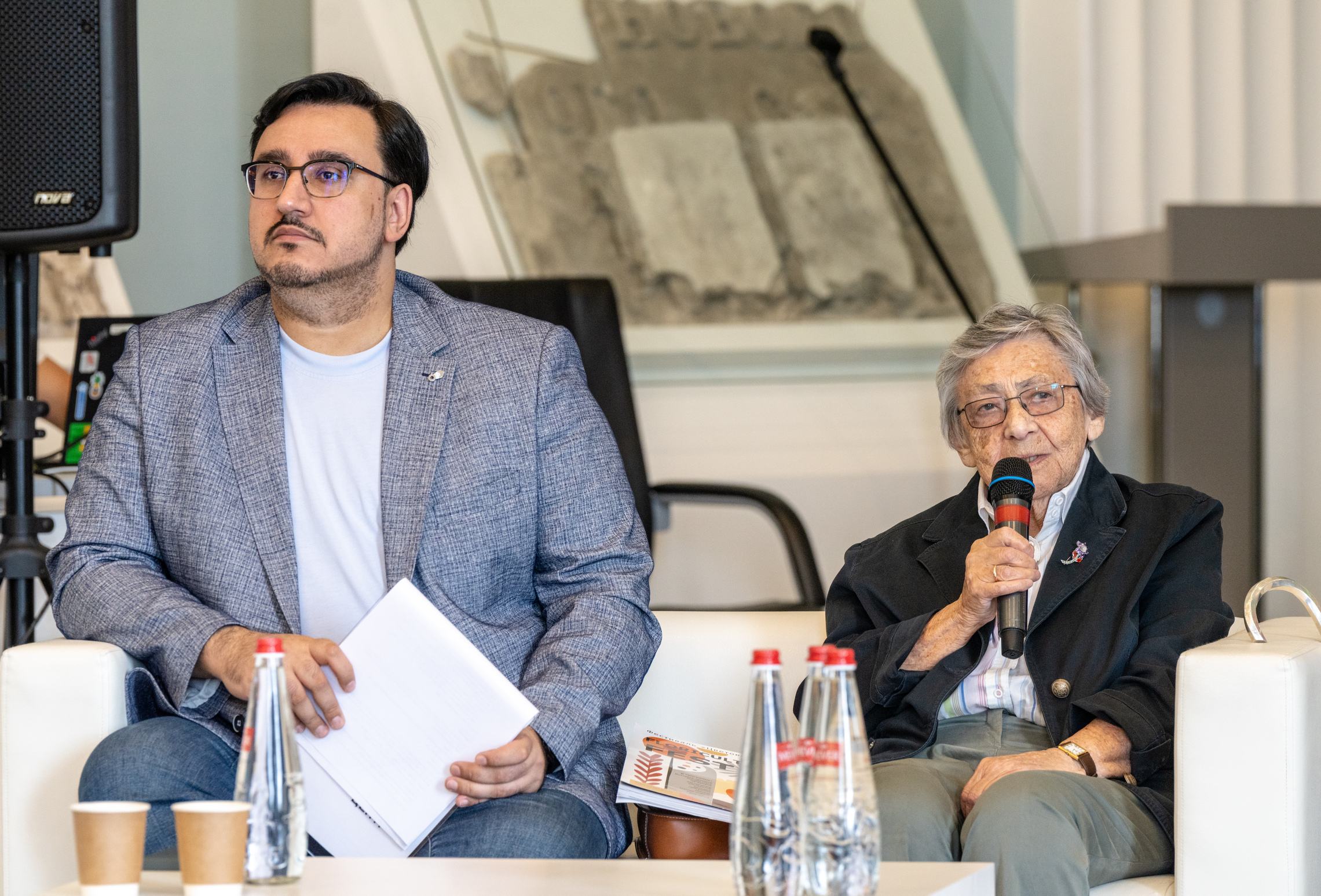
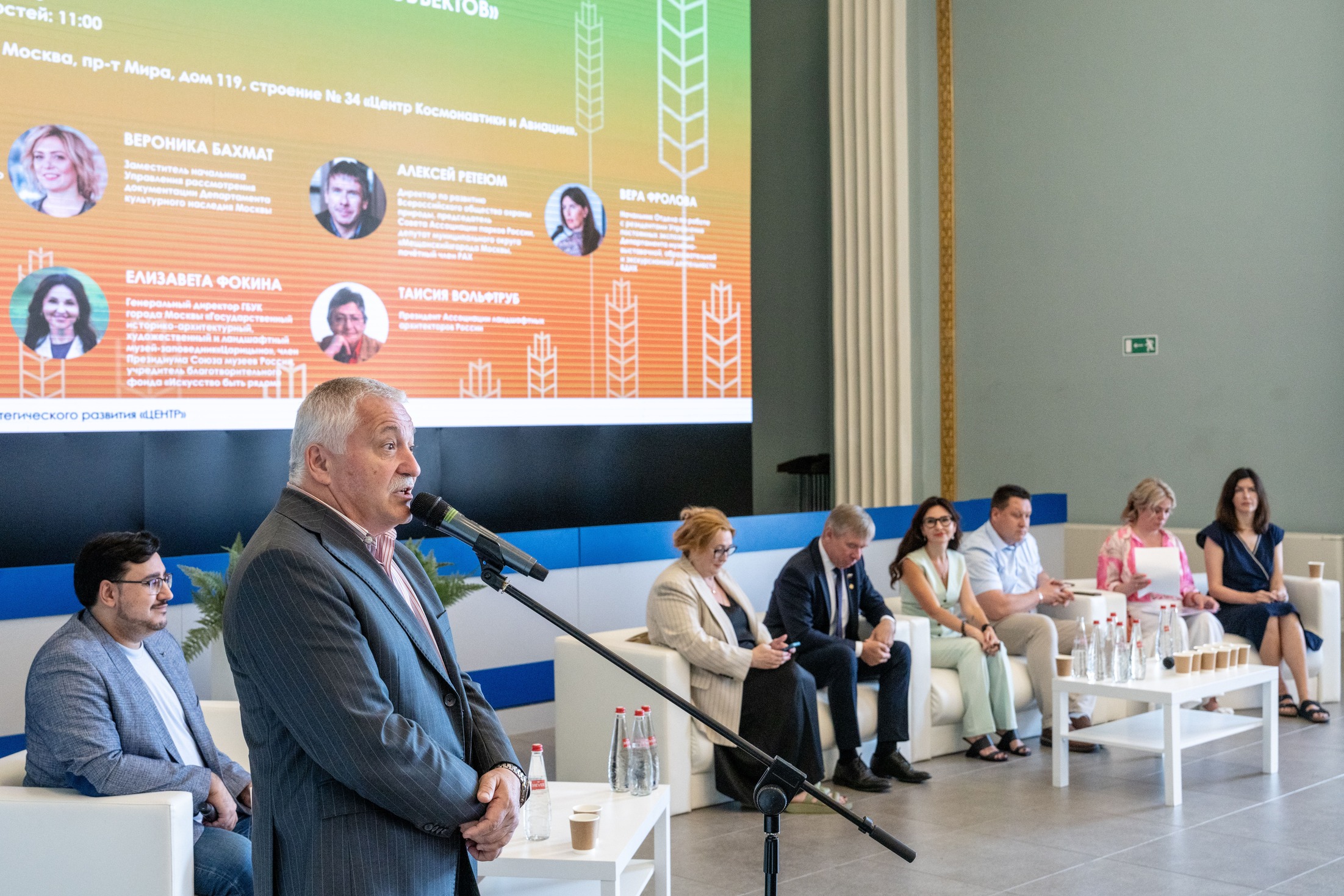
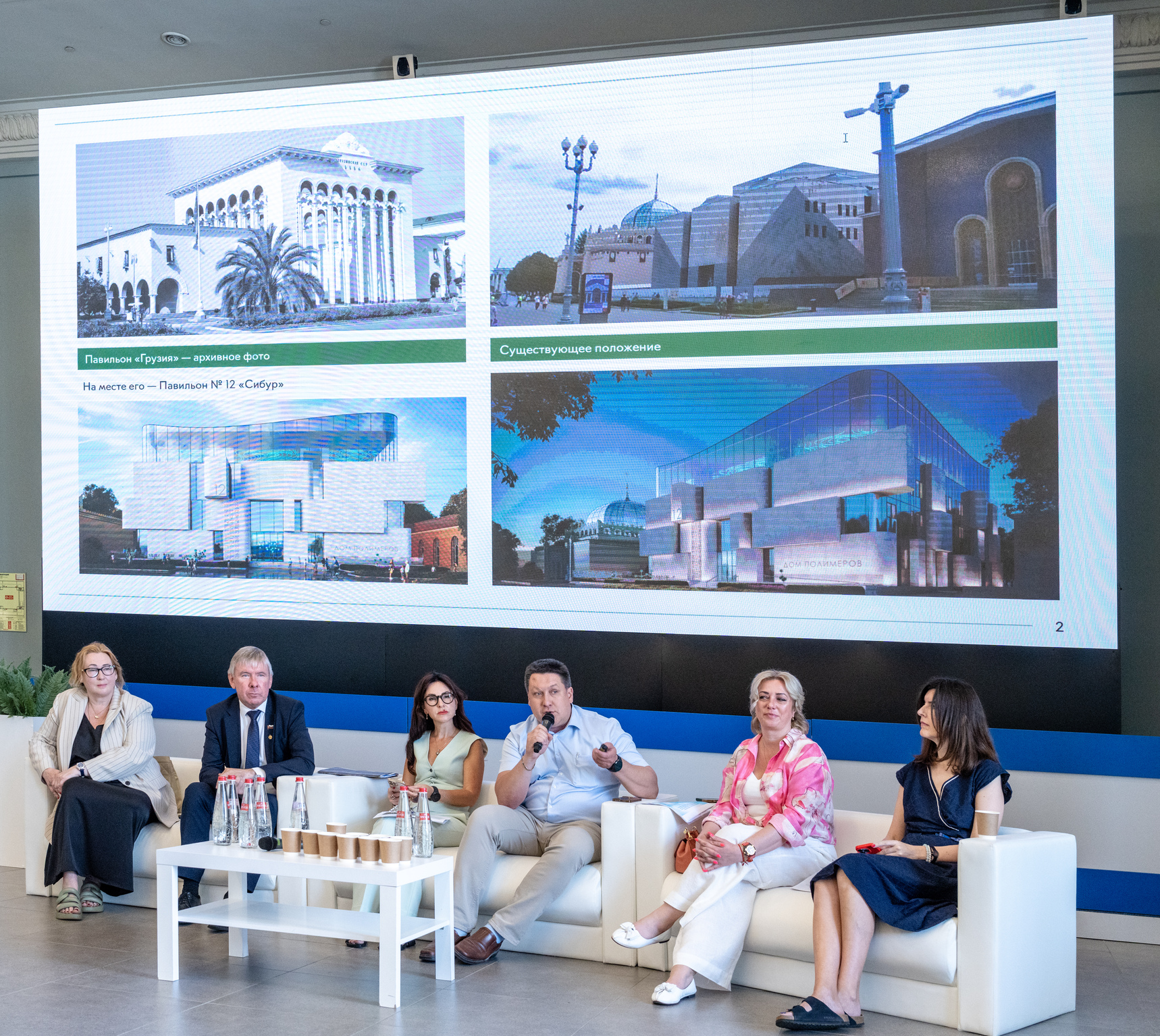
Photo: VDNKH Press Service