From Depressed Industrial Zones to Dynamic Urban Spaces: “CENTER” Identifies Key Trends in Moscow’s New Industrialization
Experts from the Strategic Development Agency “CENTER” analyzed the top seven trends in the development of Moscow’s industrial territories over the past 10 years, commissioned by the Moscow Foundation for Industry and Entrepreneurship Support. The study, “MOSCOW RE: INDUSTRIAL 2.0”, not only describes trends but also examines the challenges facing the city in its new economic phase and provides recommendations on overcoming them. The document has practical value, helping industry professionals understand how to increase the efficiency of industrial areas and preserve industrial heritage.
Sergei GeorgievskiiCo-founder of Agency for strategic development "CENTER"
Moscow is currently in a phase of reindustrialization, with industry growing rapidly through new mechanisms for managing industrial territories. Emphasis is placed on high-tech development and modern urban practices. As a result, Moscow’s appearance is changing for the better, balancing industrial growth with residents’ comfort.
For example, Moscow accounts for 16% of all Russia’s innovative products. Over the past decade, industrial output has tripled; production of electrical equipment increased more than 20-fold; computers, electronic, and optical products nearly 36-fold; and over 400,000 high-productivity jobs were created.
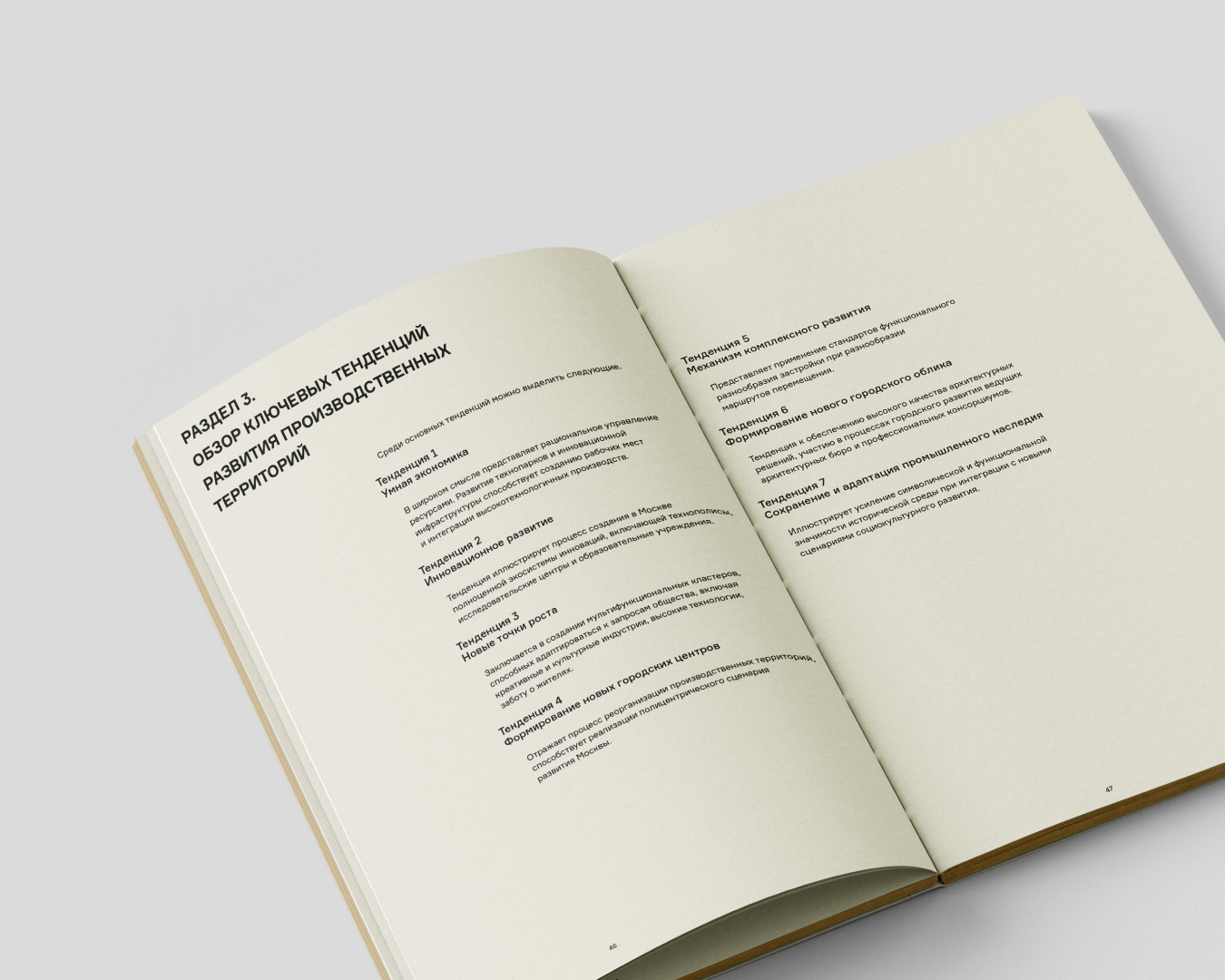
The reorganization of industrial territories has become a key development mechanism, aligned with trends such as:
- Smart economy (IoT, big data);
- Innovation development (based on ecosystems for new technology creation and implementation);
- New growth points (multifunctional clusters adaptable to society’s needs);
- Creation of new business and social hubs outside the city center;
- Integrated territorial development (permeable multifunctional environments in previously closed industrial areas);
- Formation of an aesthetically attractive industrial zone appearance;
- Preservation and adaptation of industrial heritage.
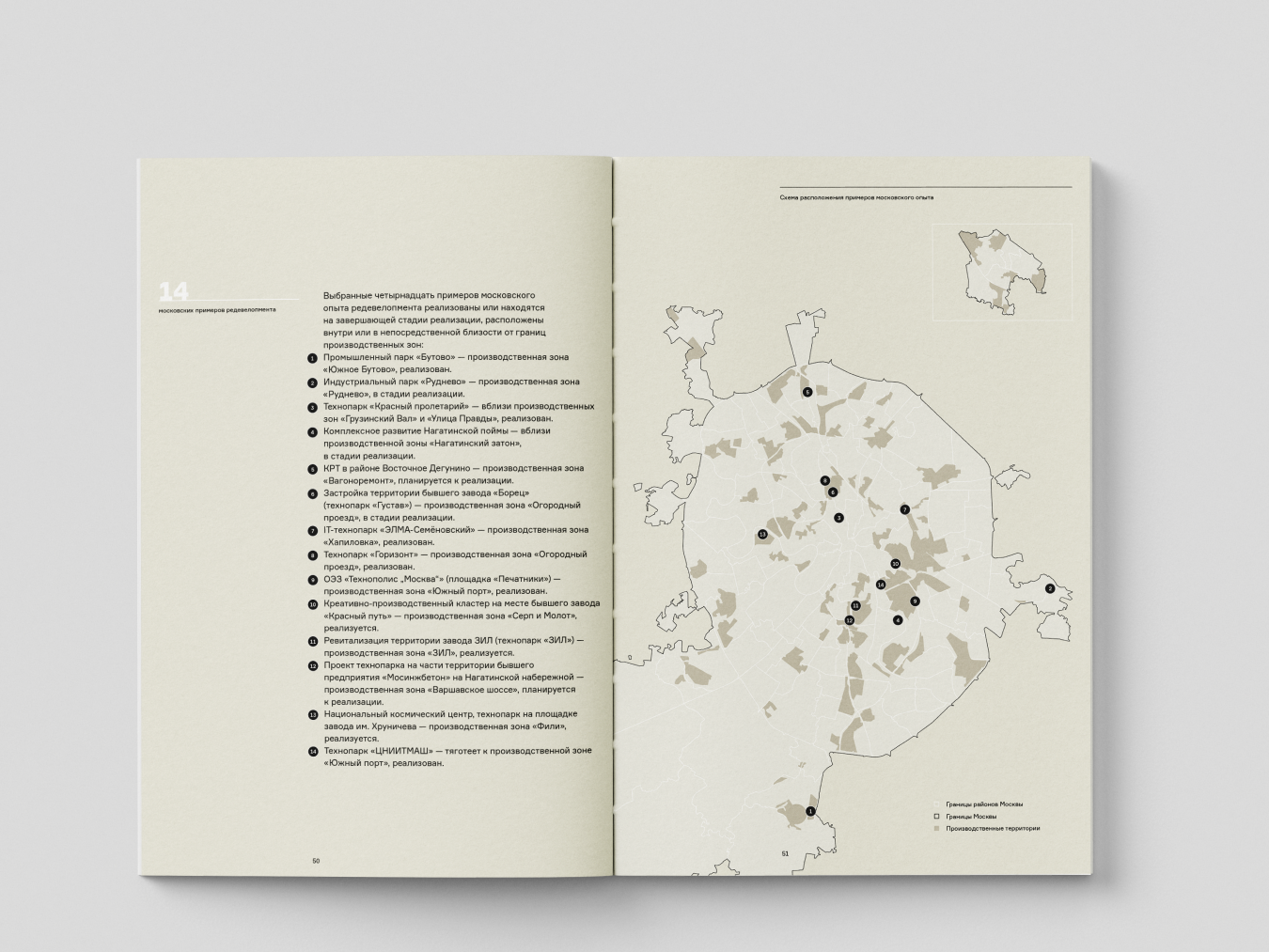
The study provides exemplary cases for each trend. The creation of new urban centers is illustrated by the integrated development of Nagatinskaya Poyma, featuring business-class housing, recreational clusters, a transport hub, and one of the city’s largest infrastructure projects—a shipyard. The transformation of industrial areas is exemplified by the former Borets factory site, where a creative industries technopark is being developed with unique architecture and preserved historical elements.
Experts also addressed challenges, such as the lack of Russian suppliers amid the shift to a smart economy and innovation. One solution is strengthening synergy between business and universities or research institutes. Solutions are presented for each key trend.
Head of the Analytical Department Agency for strategic development "CENTER"Olga Gritsan

Moscow’s 83 industrial zones provide significant resources for creating new urban growth points and modernizing production infrastructure. Redevelopment of industrial areas is an effective tool for adapting cities to modern economic challenges. Successful implementation requires a comprehensive approach, combining urban planning, architectural, economic, ecological, and socio-cultural solutions.
The study will be submitted to relevant Moscow government departments as an analytical basis for territorial redevelopment projects.
The “MOSCOW RE: INDUSTRIAL 2.0” report can be read and downloaded at reprom2.moscow.