
Expert Exclusive: Sergei Georgievskii Shared Ideas on Territorial Development with the Noôdome Community
Sergei Georgievskii spoke at the Social Investments forum organised by the Noôdome community together with the social design centre Platforma. Noôdome is a meeting point for entrepreneurs, scientists, and figures from culture and the arts who are ready to contribute to the development of society. Its members include, for example, Moscow’s Chief Architect Sergey Kuznetsov, public figure Sergey Kapkov, economist Andrey Sharonov, and many other well-known personalities. Membership is granted by recommendation from existing members and subject to approval by a committee drawn from the community itself.
The co-founder of the Agency for strategic development "CENTER" took part in the forum as an expert speaker in the session New Approaches to Territorial Development: Competition for Human and Symbolic Capital. The aim of the forum was “to create a platform for open dialogue between the state, business, and experts, and to move from social investment to social architecture,” as well as “to explore how to build socially responsible business models in today’s conditions, how to engage the state and society in long-term projects, and how to withstand competition for talent, reputation, and local markets.”
As Sergei Georgievskii noted, it is important to encourage both cooperation and healthy competition between territories when it comes to resources. However, in terms of creating a comfortable urban environment, there should be no rivalry, since a socially oriented state must ensure compliance with basic standards regardless of a region’s economic performance. When it comes to competition for qualified labour, a key role should be played by major employers, who need to pay special attention to local identity.
“In difficult conditions, during periods of turbulence, identity is what sustains us. We worked with Norilsk Nickel, and that case showed that in Norilsk it was possible to create a culture in which people identify themselves with the city. They do not want the introduction of rotational shift work — they are Norilsk residents. In other words, people want to live there: they have their own community and cultural institutions that bring people together — a theatre, a museum, and so on. Yakutsk is the fastest-growing city and the youngest capital among the federal subjects because communication channels have been created there and there is a dialogue between generations. If we look, for example, at the Pole of Cold, where temperatures drop below minus 70 degrees Celsius, about 200 families lived there before the Revolution, the same number during the Soviet period, and the same number today. The figure has not changed because there is a strong local identity. In Soviet times, people were offered relocation to Moscow, Saint Petersburg, anywhere. But they did not leave.”
Around 20 experts spoke during the session, including Vladimir Kosteyev, Adviser at the Directorate for Public Projects of the President of the Russian Federation; Oleg Rakitov, Head of Sociocultural Programmes at VEB.RF; Maria Kalinina, Director of Socially Significant Projects at Rosatom; Dmitry Poyarkov, Head of Corporate Social Responsibility and Brand at Severstal; and Anna Ishchenko, CEO of the architectural bureau Wowhaus. The task of the working group was to develop “the most practical recommendations possible.”
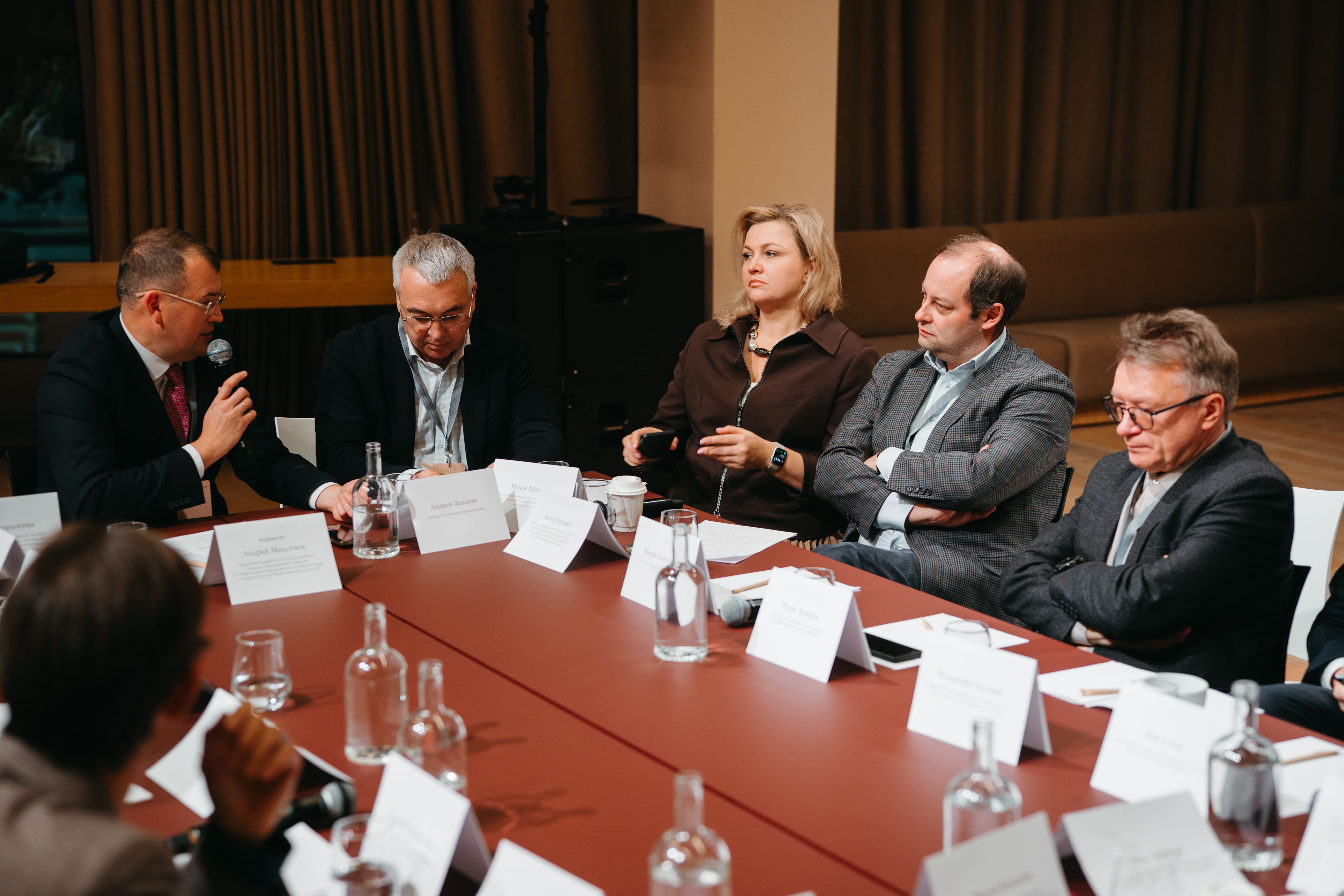
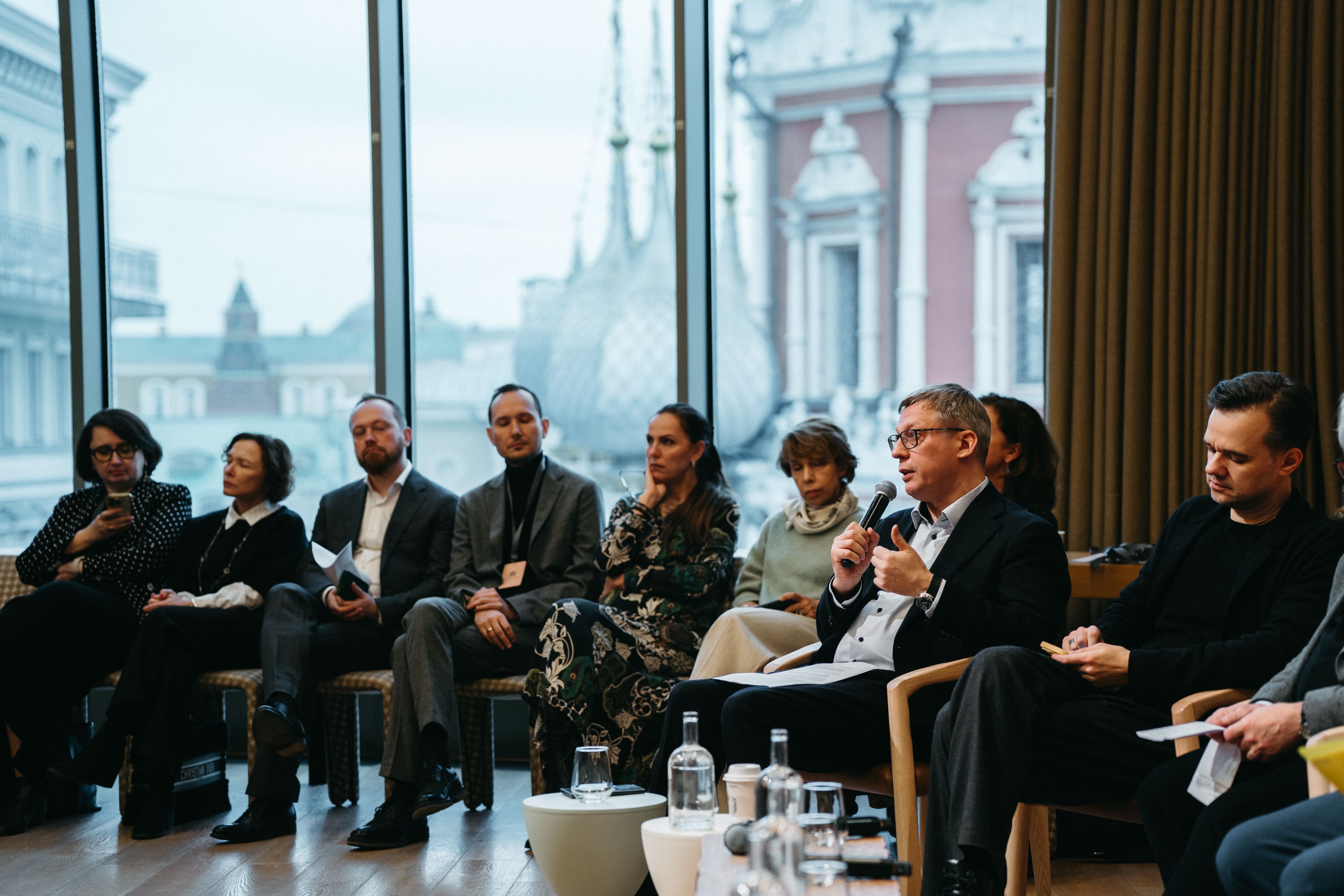
Photo: press service of the Social Investments forum