
How the Former Silk Mill Is Restoring Naro-Fominsk’s Urban Center
Specialists from Agency for strategic development "CENTER" conducted a field study of the former Naro-Fominsk Silk Mill. Today, the mill buildings are being adapted for residential, commercial and cultural uses, while the site’s industrial heritage is becoming a resource for urban development.
The redevelopment of the site began in 2014. Its objective extends beyond the restoration of individual buildings: the former industrial site is being transformed into a new urban center with a waterfront, public spaces, cultural programming and an active community.
“Giving the city back to its residents is something that has already happened: the city now has a center that it did not have before - an area that had simply been abandoned. [...] Our primary mission is to protect the city from poorly considered piecemeal development and create a sound, high-quality environment that people do not want to leave,” said Bogdan Grinchuk, Director of the FABRIK Cultural Center.
The site’s heritage is interpreted through the Interweavings project, which runs from 2024 to 2026. Art residencies, exhibitions, performances and audio walks explore the rhythms of production, the history of silk manufacturing, the visual identity of the site and the memories of former mill workers.
One of the site’s key heritage features is the 1969 mural We Will Build Our New World! Despite 35-40% delamination, the mural was stabilised in situ, preserving the historic landmark on the town’s main street.
The case demonstrates that culture can become an integral and sustainable part of a real estate development project when supported by appropriate infrastructure, professional curatorial work and the local community. At the same time, temporary artistic initiatives need to be incorporated into a long-term heritage conservation strategy.
“In Naro-Fominsk, the former industrial site is developing not as an isolated real estate project, but as a new urban center that is open and accessible to residents. The artistic reinterpretation of former employees’ memories, production technologies, products and architectural imagery within the former mill buildings offers a new perspective on the site’s industrial aesthetic. It is also renewing residents’ interest in their own history and the role that industry has played in shaping it,” said Andrey Vashchuk, Lead Project Analyst at Agency for strategic development "CENTER".
The case was studied as part of the research project Analysis of Practices for the Capitalisation and Representation of Industrial Heritage, conducted by Agency for strategic development "CENTER" at the initiative of the Vladimir Potanin Foundation. The final findings will be presented to the professional community at the end of 2026.
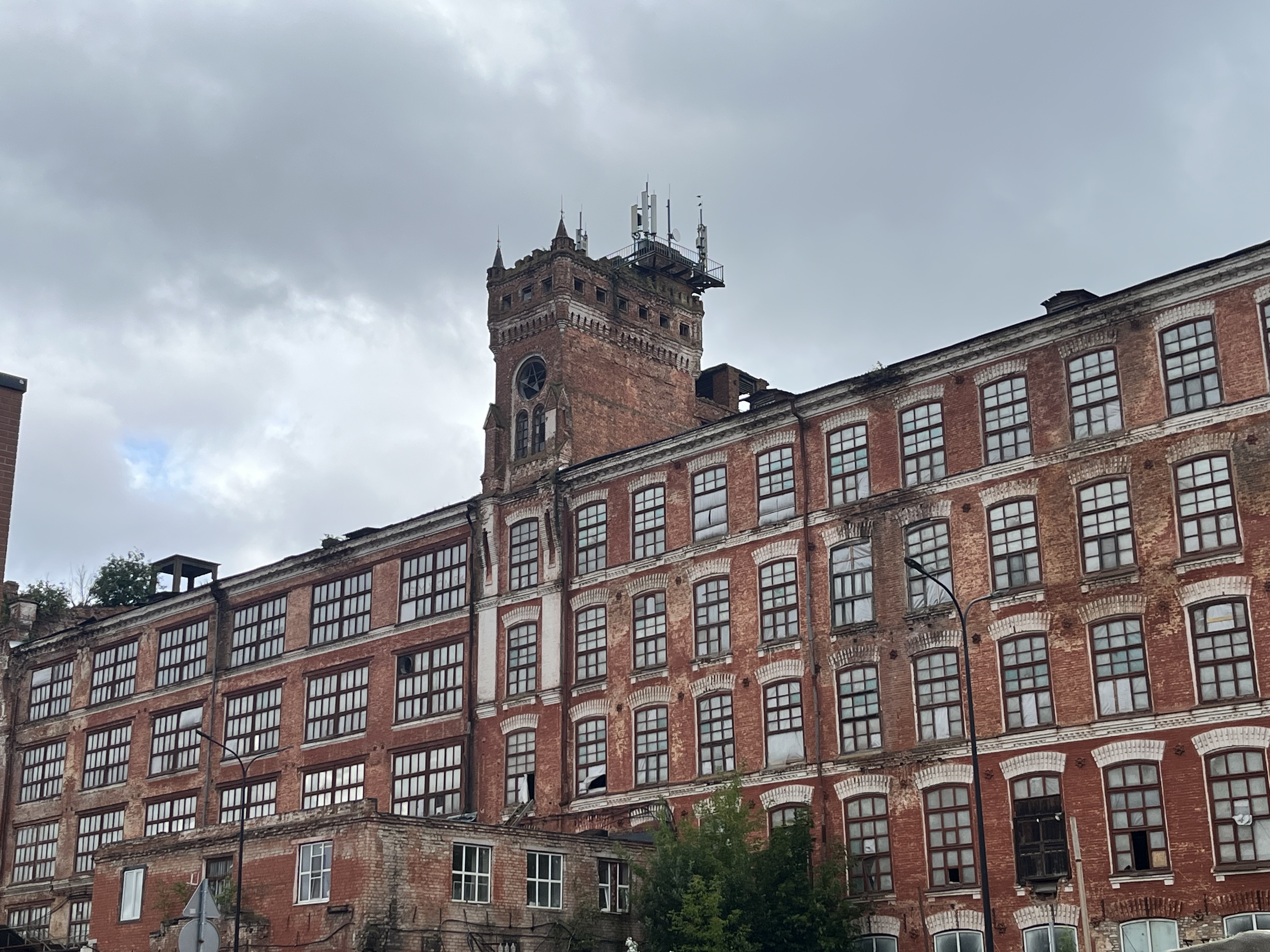
Photo: Agency for strategic development "CENTER"